Phonics at St. Peter’s
What is Phonics?
At St. Peter's Primary Academy, we believe that learning to read is one of the most important skills a child will ever acquire. Reading opens the door to every area of the curriculum and lays the foundations for future learning, confidence and success.
We teach phonics through Little Wandle Letters and Sounds Revised, a systematic synthetic phonics programme that provides children with the knowledge and skills needed to become fluent, confident readers and writers. Through carefully sequenced daily lessons, children learn how sounds are represented by letters and letter groups, enabling them to decode unfamiliar words, read with increasing fluency and apply their knowledge when writing.
Phonics is taught through a highly structured programme of daily lessons across Nursery, Reception and Key Stage One. Each lesson provides opportunities for children to revisit previous learning, learn new skills, practise together and apply their knowledge independently. Through repetition, explicit teaching and regular practice, children develop the automaticity and confidence needed to become successful readers.
Parent/ carer information
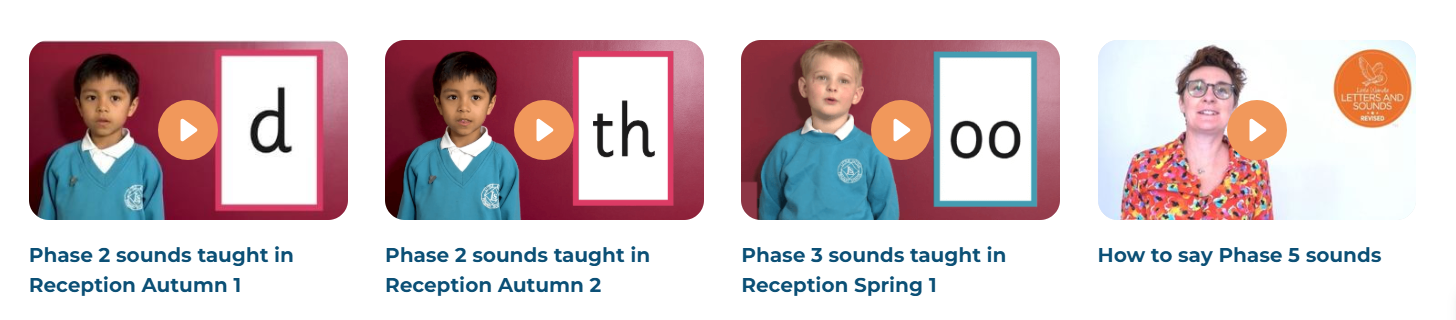
To help support your child's reading journey at home, please use the link below to access the Little Wandle website, where you will find helpful information, phoneme pronunciation videos and additional resources for parents.
Supporting your child with reading
Although your child will be taught to read at school, you can have a huge impact on their reading journey by continuing their practice at home.
There are two types of reading book that your child may bring home:
A reading practice book. This will be at the correct phonic stage for your child. They should be able to read this fluently and independently.
A sharing book. Your child will not be able to read this on their own. This book is for you both to read and enjoy together.
Reading practice book
This book has been carefully matched to your child’s current reading level. If your child is reading it with little help, please don’t worry that it’s too easy – your child needs to develop fluency and confidence in reading.
Listen to them read the book. Remember to give them lots of praise – celebrate their success! If they can’t read a word, read it to them. After they have finished, talk about the book together.
Sharing book
In order to encourage your child to become a lifelong reader, it is important that they learn to read for pleasure. The sharing book is a book they have chosen for you to enjoy together.
Please remember that you shouldn’t expect your child to read this alone. Read it to or with them. Discuss the pictures, enjoy the story, predict what might happen next, use different voices for the characters, explore the facts in a non-fiction book. The main thing is that you have fun!
Tips for Reading with Reluctant Readers
Every child develops as a reader at their own pace. If your child is sometimes reluctant to read, don't worry. The most important thing is to keep reading enjoyable, positive and pressure-free.
Here are some ways you can help:
Let your child choose what they read, whether that's fiction, non-fiction, comics, magazines, joke books or information texts.
Read together. You could take turns reading pages, paragraphs or even sentences.
Make reading part of your daily routine, even if it's only for a few minutes.
Celebrate effort rather than accuracy. Praise your child for having a go and building their confidence.
Re-read favourite books. Familiar texts help children develop fluency and confidence.
Use different voices for characters and bring stories to life through expression and enthusiasm.
Follow your child's interests. If they love dinosaurs, football, space, animals or superheroes, choose books linked to those topics.
Talk about the book rather than testing them. Ask questions such as:
What was your favourite part?
Which character did you like best?
What do you think will happen next?
Read to your child regularly, even if they can already read independently. Listening to stories develops vocabulary, comprehension and a love of reading.
Share your own enjoyment of reading by talking about books, newspapers, recipes, websites or magazines that you read.